I'll be honest I didn't take Google AI Mode seriously at first. I'd seen enough "SEO is dead" headlines over the years to know most of them were noise. But a few months into 2026, I started noticing something in my own traffic reports that I couldn't explain away, and once I dug in, it was clear Google AI Mode wasn't just another feature update. It was changing how people actually search, and it changed how I approach every piece of content I publish now.
What Is Google AI Mode?
Google AI Mode is a Gemini-powered, end-to-end AI search experience closer to a conversational assistant than a traditional results page. Instead of matching a query to ten links, it runs multiple related searches behind the scenes, synthesizes what it finds, and hands the user one composed answer with citations. I only understood the scale of this once I saw the numbers myself: by mid-2026, Google confirmed Google AI Mode had crossed a billion monthly users, with query volume more than doubling every quarter since launch. Once you know that, you stop treating Google AI Mode as an experiment and start treating it as part of how search works now which is exactly why understanding how Google actually ranks websites in 2026 has become inseparable from understanding Google AI Mode itself.
AI Mode vs. AI Overviews
I made the mistake early on of treating Google AI Mode and AI Overviews as the same thing. They're not, and I learned that the hard way when a strategy that worked for one didn't move the needle for the other. Data from 2026 backs up what I saw firsthand: only around 14% of URLs cited inside Google AI Mode overlap with the URLs cited in AI Overviews for the same topics. That means:
- Ranking well in AI Overviews doesn't guarantee you'll show up in Google AI Mode
- The two need to be tracked and optimized as separate targets, not one combined effort
- A content page can lose visibility in one while gaining it in the other, so checking only one metric gives you an incomplete picture
How Google AI Mode Affects Your Traffic
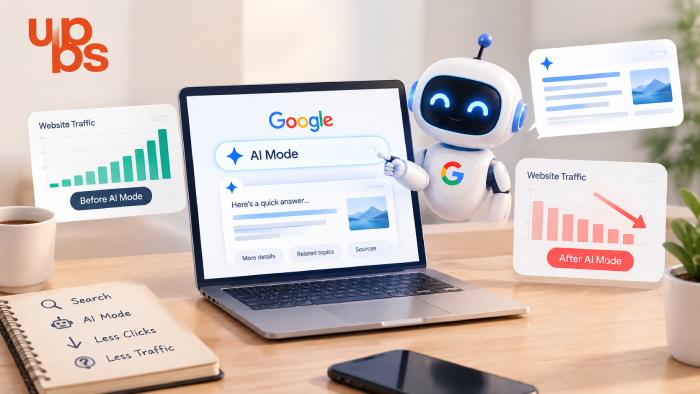
Here's where it got personal for me. One of my own pages was sitting in position one for a query I genuinely cared about and I watched it lose close to a fifth of its clicks almost overnight once Google AI Mode began answering that query directly. Broader 2026 data confirmed what I wasn't imagining: AI Overviews now appear on roughly 48% of Google queries, and informational searches touched by Google AI Mode have seen click declines as steep as 30–40%. If your reports show steady traffic but your actual inquiries have quietly dried up, I'd bet you're seeing exactly what I did and it's worth reading why your website might be getting traffic but no real leads before assuming your funnel itself is broken.
Why SEO Is Becoming GEO
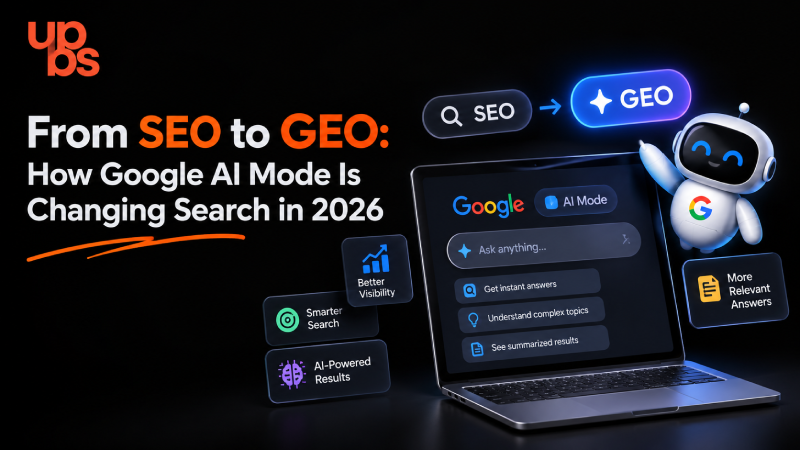
Once I accepted Google AI Mode wasn't a passing phase, I had to rethink what "ranking" even meant for my own content. This is where Generative Engine Optimization, or GEO, entered the picture for me optimizing content specifically to get cited inside AI-generated answers, not just to rank in a list of links. I didn't throw out everything I knew about SEO to do this; Google AI Mode still rewards solid technical fundamentals underneath it all. I just added a layer on top: writing answers clearly enough that both a human reader and an AI model could pull the right information out immediately.
How to Optimize Content for Google AI Mode
These are the exact changes I made once I understood what Google AI Mode was actually rewarding:
- Answer the question early — I stopped burying the answer three paragraphs deep and started leading with it
- Use clear structure — headings, short paragraphs, and lists so an AI model can extract a clean answer easily
- Build topical depth over time — one-off posts got cited far less consistently than pages backed by ongoing coverage of the same topic
- Keep facts specific and current — vague claims got skipped over in favor of pages with clear numbers and specifics
- Don't ignore technical SEO — Google AI Mode still needs to crawl, index, and understand your site the same way traditional search does
None of these were dramatic changes on their own, but together they were the difference between getting cited by Google AI Mode and getting quietly skipped over. If you're not sure whether your own content is structured the right way for this, working with someone who lives in SEO strategy day-to-day will save you the months of trial and error it took me to figure this out myself.
Rethinking Your Content Strategy
I used to think publishing more often was the safest strategy. Google AI Mode changed that math for me completely. Here's what actually shifted once I paid attention:
- Thin posts that used to rank on sheer frequency started getting passed over entirely
- Fewer, deeper pieces began earning consistent citations instead
- Content that read like a genuine, complete answer performed far better than content written mainly to attract clicks
If you've been publishing regularly and still watching your rankings stall, you're probably running into exactly what I did and it's worth reading why struggling to rank despite consistent content has become so common since Google AI Mode rolled out more broadly.
How to Measure Google AI Mode's Impact
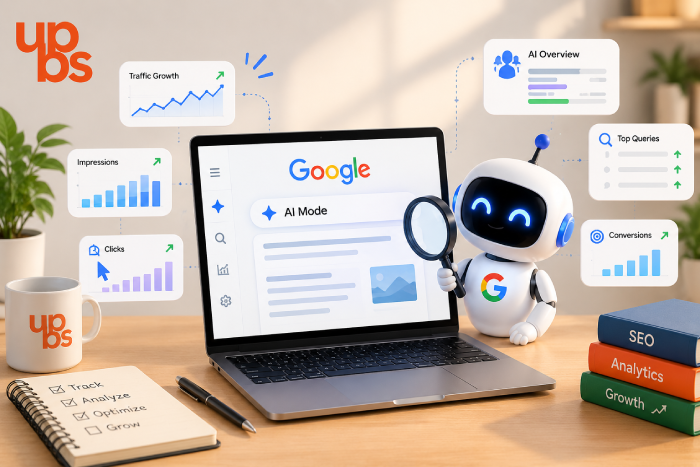
For a while, I had no real way to prove any of this beyond gut feeling. That changed when Google Search Console rolled out dedicated Generative AI performance reports, which finally let me see impressions coming specifically from Google AI Mode and AI Overviews. Now, when I see an informational page lose clicks while my branded searches hold steady, I know I'm looking at Google AI Mode's fingerprints, not a core update penalty and that distinction changes how I respond to it every time.
Why Choose UPBS Technology
I'll admit this part honestly too once Google AI Mode started touching content strategy, technical structure, and brand visibility all at once, trying to manage it solo stretched me thin. That's the point where a proper team makes the real difference instead of patching things reactively. At UPBS Technology, this is exactly the kind of shift we track closely for clients before it costs them traffic:
- Auditing content against what Google AI Mode actually rewards, not outdated ranking checklists
- Restructuring pages so they read as complete, citation-ready answers
- Separating AI-surface performance from traditional ranking data so you know what's actually happening
- Building long-term topical authority instead of chasing one-off keyword wins
Reacting to Google AI Mode after the drop has already happened is a much harder position to recover from than adapting early which is the whole point of watching this shift closely in the first place.
SEO Is Not Enough Alone
The other thing I learned the hard way: Google AI Mode doesn't just look at your page it weighs signals from across your entire online presence when deciding what to trust and cite. That pushed me to stop treating SEO as an isolated task and fold it into a broader digital presence strategy, which is exactly the direction I've seen the top digital marketing companies in India moving toward as they adjust their own service models for 2026.
Don't Wait Until You Lose Traffic to Adapt
I lost real traffic before I understood what was happening with Google AI Mode, and I don't think you need to make the same mistake. Talk to UPBS Technology if you want a second pair of eyes on your own numbers. We'll tell you honestly whether what you're seeing is Google AI Mode at work, and exactly what to do about it.
Frequently Asked Questions
What is Google AI Mode?
Google AI Mode is an AI-powered search experience built on Google's Gemini model that generates direct, conversational answers instead of showing a traditional list of links. It can run multiple related searches behind the scenes, pull information from several sources, and hand the user one composed answer with citations often without them ever clicking through to a website at all.
How do I know if Google AI Mode is affecting my traffic?
The clearest way to check is inside Google Search Console's Generative AI performance reports, which break out impressions coming specifically from AI features. Look for a pattern where informational, how-to, or explainer-style queries are losing clicks while your branded and transactional searches stay steady; that combination usually points to Google AI Mode, not a core algorithm penalty.
Is Google AI Mode the same as AI Overviews?
Not exactly, even though both are AI-generated features inside Google Search. Data from 2026 shows only around 14% overlap between the URLs cited inside Google AI Mode and the URLs cited in AI Overviews for the same topics. That means ranking well in one doesn't automatically translate into visibility in the other; they need to be tracked and optimized as two separate targets.
Can I still rank normally if Google AI Mode is answering queries directly?
Yes, but what "ranking" means for you needs to shift. Instead of focusing purely on holding a top position in a list of links, the real goal becomes earning a spot as one of the sources Google AI Mode actually pulls from and cites when it builds its answer which depends more on clarity and structure than on classic ranking signals alone.
Do I need to abandon my current SEO strategy because of Google AI Mode?
No, and you shouldn't. Technical SEO fundamentals: crawlability, indexing, site structure, credible content still matter just as much as before. Google AI Mode simply adds a new layer on top of that foundation, rewarding content that's structured clearly enough to be extracted and cited, rather than replacing what already works.