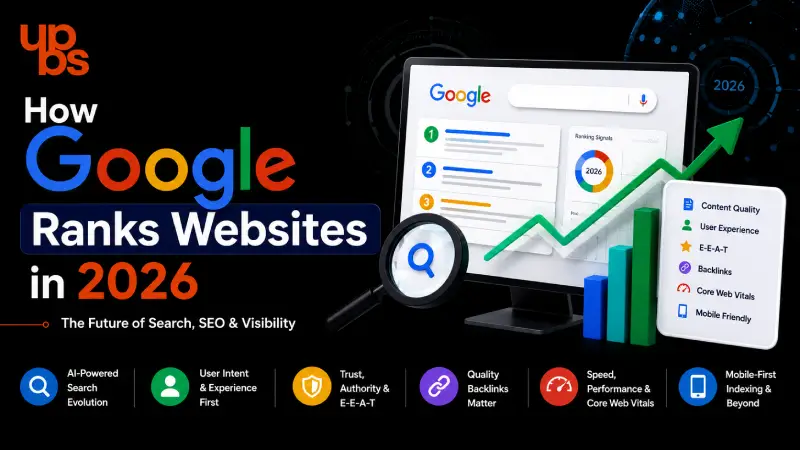
If you've ever wondered why some websites consistently appear at the top of Google Search while others struggle to gain visibility, you're not alone. Google's ranking system evaluates multiple factors to deliver the most relevant, trustworthy, and helpful results. In 2026, AI, machine learning, content quality, user experience, website performance, and brand authority will play a major role in search rankings. Many businesses also focus on how to check website ranking on Google to track their SEO progress and understand their online visibility. Modern SEO is no longer about keyword stuffing or building random backlinks; it is about creating valuable content, improving website experience, and building trust with users and search engines.
What Does Google Ranking Mean?
Google ranking refers to the position of a webpage in Google's search results for a specific keyword or search query. For example, if someone searches for "best web development company" and your website appears in the first position, your page has achieved the highest Google ranking for that query.
Google's primary goal is to provide users with the most relevant, accurate, and helpful information in the shortest time possible. To achieve this, Google's search systems analyze hundreds of ranking signals to determine which pages deserve to appear at the top of the search results.
A higher Google ranking typically leads to:
- Increased organic traffic
- Better brand visibility
- More qualified leads and conversions
- Greater user trust and credibility
- Higher return on investment (ROI) from SEO
However, ranking #1 is no longer just about using the right keywords. In 2026, Google evaluates the overall quality of a website, including its content, user experience, technical performance, topical authority, trustworthiness, and how well it satisfies user intent.
Why Ranking Matters for Every Website
Google ranking is one of the most important factors that determines a website's online success. Whether you run a small business, an eCommerce store, a SaaS platform, a healthcare website, or a personal blog, your position in Google Search directly impacts your visibility, traffic, and revenue. Understanding How Google Ranks Websites helps businesses create better SEO strategies and improve their chances of appearing higher in search results.
A higher Google ranking offers several long-term benefits:
- Increases Organic Traffic: Higher positions receive significantly more clicks, bringing consistent visitors without paying for ads.
- Builds Trust and Credibility: Users often perceive top-ranking websites as more reliable and authoritative than lower-ranked competitors.
- Generates More Leads and Sales: Better visibility attracts qualified visitors who are actively searching for your products or services, increasing conversion opportunities.
- Reduces Marketing Costs: Strong organic rankings can reduce dependence on paid advertising, delivering sustainable traffic over time.
- Strengthens Brand Awareness: Appearing repeatedly in relevant search results helps users recognize and remember your brand.
- Provides a Competitive Advantage: Ranking above competitors allows your business to capture more market share and establish itself as an industry leader.
In 2026, ranking well requires much more than targeting keywords. Google rewards websites that consistently deliver helpful content, excellent user experiences, fast-loading pages, strong technical SEO, and genuine expertise. Websites that focus on solving users' problems rather than simply trying to manipulate rankings are more likely to achieve lasting success.
How Google Ranks Websites in 2026
Google's ranking system has become smarter than ever. In 2026, ranking isn't just about keywords or backlinks; Google uses AI, machine learning, and hundreds of ranking signals to identify the most helpful, relevant, and trustworthy pages for every search query. Understanding how to rank website on Google requires focusing on multiple SEO factors, including content quality, search intent, website authority, user experience, technical SEO, and trust. Below are the most important ranking factors you should focus on to improve your website's visibility and achieve better search rankings.
1. Search Intent Comes First
Google first understands what users are actually looking for. Content that matches the user's search intent and provides the most relevant answer has a higher chance of ranking better in search results.
2. Helpful, Original, and People-First Content
High-quality content remains one of the most important ranking factors. Google prefers original, well-researched, and valuable content that solves user problems instead of content created only for search engines.
3. E-E-A-T (Experience, Expertise, Authoritativeness, and Trust)
Google gives more importance to websites that demonstrate trust and credibility. Showing expertise through accurate content, author information, reviews, and strong brand signals helps improve search visibility.
4. User Experience and Core Web Vitals
A smooth user experience plays an important role in SEO success. Fast loading speed, mobile responsiveness, easy navigation, and stable page performance help improve user satisfaction and rankings.
5. High-Quality Backlinks
Backlinks from trusted and relevant websites help Google understand your website's authority. Focus on earning quality links rather than building a large number of low-value backlinks.
6. Technical SEO Signals
Technical SEO ensures that Google can properly crawl, understand, and index your website. Factors like HTTPS security, XML sitemap, clean URLs, optimized images, and fixing technical errors support better rankings.
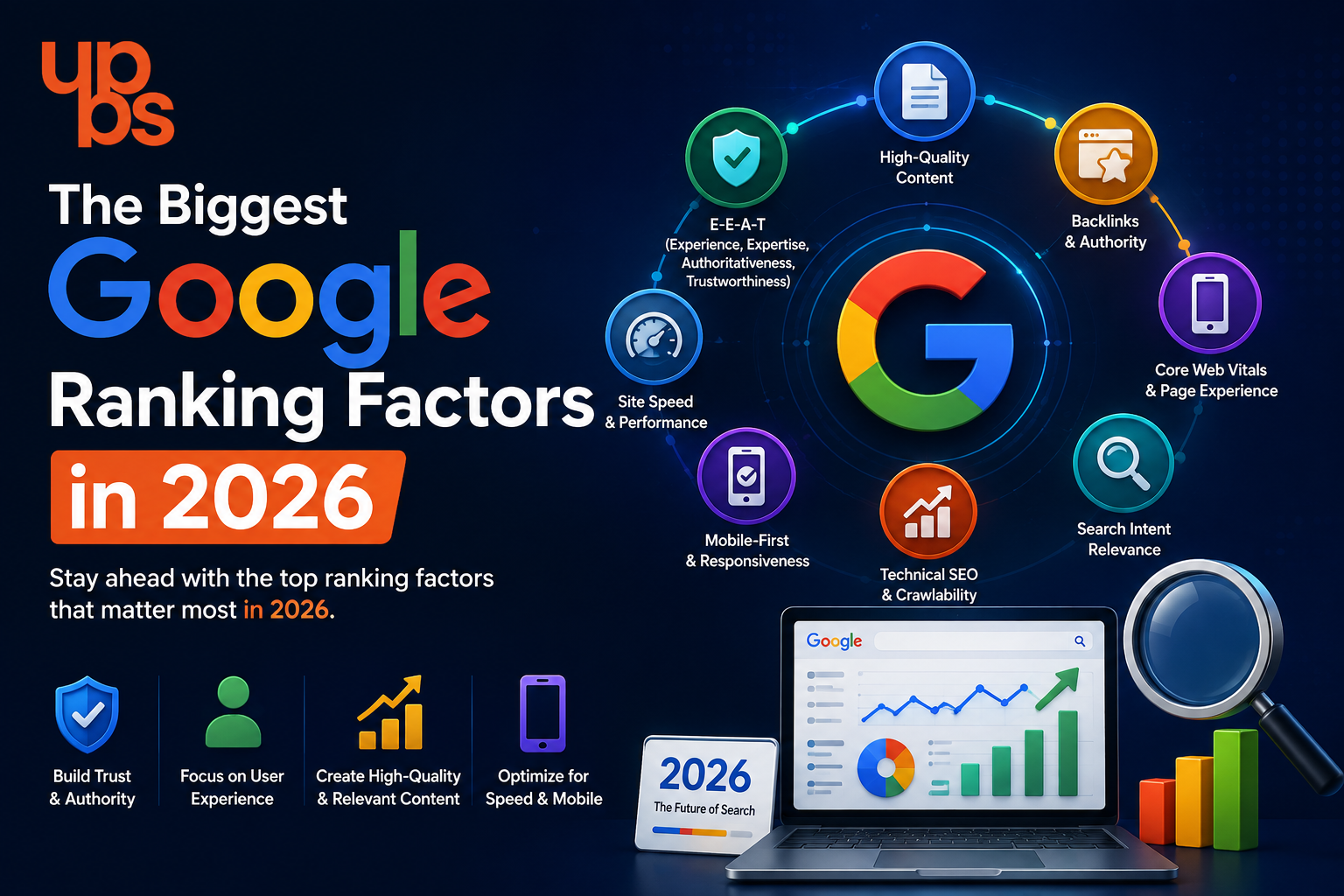
The Biggest Google Ranking Factors in 2026
Google uses hundreds of signals to determine where a webpage should appear in search results, but not all ranking factors carry the same weight. Understanding How Google Ranks Websites is essential for creating an effective SEO strategy in 2026. Google's AI-driven ranking systems prioritize websites that provide the best overall experience for users rather than those that simply follow traditional SEO tactics.
The most successful websites consistently focus on five key areas: content quality, user intent, authority, page experience, and trust. Together, these factors help Google identify which pages deserve higher rankings and provide the greatest value to searchers.
Let's explore the most influential Google ranking factors in 2026.
Content Quality
High-quality content remains the foundation of SEO. Your content should be original, accurate, well-structured, and provide real value to users. Google rewards content that answers questions clearly and demonstrates expertise rather than content created only for rankings.
Relevance to User Intent
Google ranks pages that best match the user's search intent. Whether someone is looking for information, comparing services, or ready to make a purchase, your content should align with their expectations and provide a complete answer.
Website Authority
Authority is built through consistent, high-quality content and backlinks from trusted websites. Publishing in-depth content within your niche and earning credible mentions helps establish your website as a reliable source of information.
Page Experience
A positive user experience supports better rankings. Fast loading speeds, mobile responsiveness, HTTPS security, simple navigation, and good Core Web Vitals help users interact with your website more effectively.
Brand Trust and Online Reputation
Google values trustworthy brands with a strong online reputation. Genuine customer reviews, accurate business information, transparent author details, and secure website practices all contribute to higher credibility and better search visibility.
SEO Tip: Focus on creating valuable content, improving user experience, building authority, and maintaining trust. These core factors have the greatest influence on Google rankings in 2026.
Common SEO Mistakes That Hurt Google Rankings
Even the best content can struggle to rank if your website has fundamental SEO issues. Understanding How Google Ranks Websites helps identify the mistakes that can negatively impact search visibility. While Google continues to improve its ranking systems, it also becomes better at detecting practices that create a poor user experience or attempt to manipulate search results.
Keyword Stuffing
Keyword stuffing is the practice of excessively repeating a target keyword in an attempt to improve rankings. While this tactic may have worked many years ago, Google's modern algorithms recognize it as a poor user experience.
Thin or Duplicate Content
Google prefers comprehensive, original content that provides unique value. Pages with very little information or content copied from other websites are unlikely to perform well in search results.
Ignoring Technical SEO
Technical SEO provides the foundation that allows search engines to crawl, understand, and index your website efficiently. Even excellent content may struggle to rank if technical issues prevent Google from accessing it properly.
Poor Mobile Experience
Google uses mobile-first indexing, meaning it primarily evaluates the mobile version of your website when determining search rankings.
Buying Low-Quality Backlinks
Backlinks remain an important ranking signal, but not all links are beneficial. Purchasing backlinks from spammy or irrelevant websites can damage your site's reputation and may result in ranking losses.
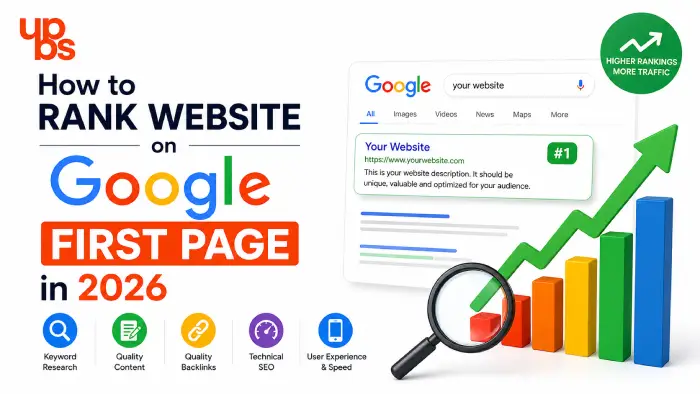
How to rank website on google first page in 2026
Improving Google rankings in 2026 requires a user-focused SEO strategy. Google's AI-powered systems reward websites that provide helpful content, great user experience, strong authority, and trustworthy information. Businesses looking for how to rank website on Google first page should focus on sustainable SEO strategies rather than quick tricks. By creating valuable content, improving website performance, building authority, and following SEO best practices, websites can achieve better visibility and long-term growth.
Create Helpful Content Consistently
Content remains a major ranking factor. Create original, well-researched content that matches search intent, answers user questions, and provides real value.
Best practices include:
- Publishing informative content regularly.
- Updating outdated pages.
- Using clear headings and proper structure.
- Building topic clusters to improve authority.
Improve Website Speed
A fast website improves user experience and supports better rankings. Optimize images, reduce unnecessary code, improve server performance, use caching, and monitor Core Web Vitals to maintain better site speed.
Build Quality Backlinks
High-quality backlinks from trusted and relevant websites help improve authority. Focus on earning links through valuable content, guest posts, digital PR, and industry mentions while avoiding spammy link-building practices.
Optimise for AI Search
With the rise of AI Search and Google AI Overviews, content should be clear, structured, and trustworthy. Use descriptive headings, answer questions directly, add FAQs, implement schema markup, and demonstrate real expertise.
Monitor SEO Performance Regularly
SEO requires continuous improvement. Track important metrics like organic traffic, keyword rankings, CTR, user engagement, Core Web Vitals, backlinks, and conversions using tools like Google Search Console and Google Analytics.
Regular monitoring helps you identify opportunities, fix issues, and improve your overall SEO strategy.
Why Choose UPBS Technology for SEO Services?
Choosing the right SEO partner is essential for achieving sustainable online growth. At UPBS Technology, we combine technical expertise, data-driven strategies, and proven SEO practices to help businesses improve their search engine rankings, increase organic traffic, and generate high-quality leads. Rather than focusing on short-term ranking gains, we build customized SEO strategies that align with your business goals and adapt to Google's ever-evolving search algorithms. Our team stays updated with the latest SEO trends, AI-powered search developments, and best practices to ensure your website remains competitive in 2026 and beyond.
Whether you operate a local business, an eCommerce store, a healthcare website, or an enterprise platform, we provide SEO solutions designed to deliver measurable and long-term results.
Conclusion
Google's ranking system in 2026 is built around one simple goal: delivering the most helpful and trustworthy content to users. To improve your rankings, focus on creating high-quality content, understanding search intent, providing a fast and mobile-friendly experience, and following SEO best practices. Instead of chasing shortcuts, invest in long-term SEO strategies that build authority and trust. By consistently improving your website and adapting to Google's evolving algorithms, you can achieve sustainable organic growth and stronger search visibility.
Frequently Asked Questions (FAQs)
How to check website ranking on Google?
You can check your website ranking on Google by using tools like Google Search Console, Google Analytics, and SEO tools such as Ahrefs, SEMrush, or similar platforms. These tools help you monitor keyword positions, organic traffic, clicks, impressions, and overall search performance. Regular tracking helps you understand how your SEO efforts are improving your website visibility.
How to rank website on Google?
To rank a website on Google, focus on creating helpful and original content, optimizing pages for search intent, improving website speed, building quality backlinks, and maintaining strong technical SEO. Google rewards websites that provide valuable information, a great user experience, and demonstrate trust and authority.
How to rank website on Google first page?
Ranking a website on Google's first page requires a consistent SEO strategy. Important steps include targeting the right keywords, publishing high-quality content, optimizing on-page SEO elements, improving Core Web Vitals, earning authoritative backlinks, and regularly updating your website. Achieving first-page rankings takes time and depends on competition, website authority, and SEO execution.
How to find website ranking in Google?
You can find your website ranking in Google by searching your target keywords manually or using SEO tools like Google Search Console, SEMrush, or Ahrefs. These tools provide detailed information about keyword positions, ranking changes, impressions, and traffic opportunities, helping you track your website's performance.