Improving your website’s search engine optimization (SEO) is no longer optional. If you’re a small business owner, marketer, developer, or content creator, you need an SEO-friendly website to stay competitive. But what does making a website "SEO-friendly" really mean? Simply put, it ensures search engines like Google and Bing can easily find, understand, and rank your site while offering users a seamless browsing experience. The good news? You don’t have to be an SEO expert to make your website rank higher. By implementing a few practical strategies, you can significantly boost your SEO, attract more traffic, and improve your site’s usability.
Here are 10 simple (but effective) pro tips to optimize your website’s SEO and take it to the next level.
Key Factors of an SEO-Friendly Website
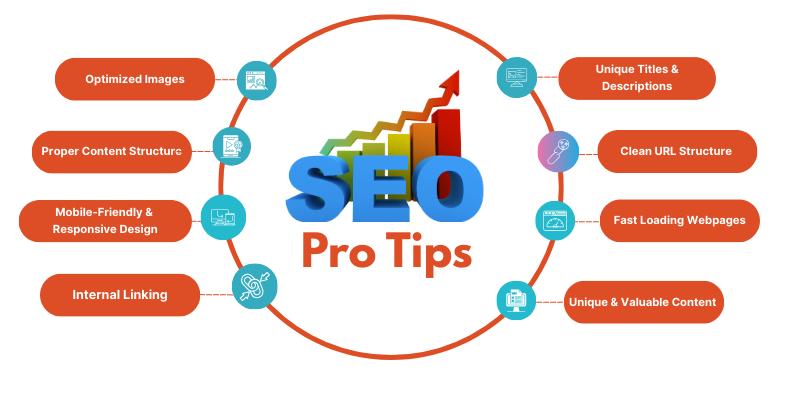
Unique Titles & Descriptions: The First Impression Matters
Your title tag and meta description are the first things users see in Google search results. A unique, keyword-focused title attracts more clicks, while a clear meta description encourages users to visit your website. Avoid duplicate or generic titles and descriptions, as they can reduce your search visibility and click-through rate. Every important page should have its own optimized title and description that accurately reflects the content.
Why It Matter
Unique titles and meta descriptions help search engines understand your page and encourage more users to click on your website. They improve your click-through rate (CTR), support better SEO performance, and make your pages stand out in search results.
Pro Tips
- Include primary keywords naturally.
- Keep titles under 60 characters and descriptions under 155 characters.
- Write compelling descriptions that entice users to click without making false promises.
Example of a good title & description:
- Title: The Ultimate Guide to Baking Perfect Brownies
- Description: Want fudgy, gooey brownies every time? Discover expert tips, recipes, and tricks to bake mouthwatering brownies in your own kitchen.
Clean URL Structure: Easy for Users & Search Engines
A clean, simple URL makes it easier for both users and search engines to understand your page. Use short, descriptive URLs that include relevant keywords, and avoid unnecessary numbers, symbols, or random characters. A well-structured URL improves readability, SEO, and user trust.
Why It Matters
Clean URLs help search engines crawl your website more effectively, improve rankings, and provide a better user experience. They also make links easier to share and remember.
Pro Tips
-
- Use “speaking URLs” (e.g., example.com/boost-seo-tips instead of example.com/p=123).
- Avoid redundant stop words like a, an, the.
- Structure URLs to reflect the page hierarchy.
Fast Loading Pages: Speed is Key
Website speed is an important SEO factor that directly affects user experience and search rankings. Fast-loading pages keep visitors engaged, reduce bounce rates, and help improve conversions. Optimize images, enable caching, and minimize unnecessary code to improve loading speed.
- Why It Matters
A faster website improves user satisfaction, supports better SEO performance, and increases the chances of ranking higher in search results while encouraging visitors to stay longer on your site.
Pro Tips
-
- Compress images without losing quality using tools like TinyPNG.
- Enable browser caching to improve load times for repeat visitors.
- Use a Content Delivery Network (CDN) to reduce server response times.
Unique & Valuable Content: The Heart of SEO
Content is the foundation of a successful website. Publish original, informative, and engaging content that answers your audience's questions and provides real value. Keep your content updated, easy to read, and focused on solving user problems..
Why It Matters
-
- Focus on solving user problems—write for humans, not robots.
- Update old blog posts with fresh information to maintain relevance.
- Use visual elements like videos, infographics, and images to add value.
Optimized Images: Make Your Site Look Great Without Slowing It Down
Images enhance your website's appearance and improve user engagement, but large, unoptimized files can slow down your site. Compress images, use modern formats like WebP, add descriptive file names, and include relevant alt text to improve accessibility and SEO. Choose the right image size for each page to maintain fast loading speeds.
Why It Matters
Optimized images improve page speed, enhance user experience, support better search engine rankings, and help search engines understand your visual content. They also reduce bandwidth usage while keeping your website visually appealing.
Pro Tips
-
- Use descriptive, keyword-focused filenames (e.g., green-tea-latte-recipe.jpg instead of DSC0003.jpg).
- Add alt text for accessibility and improved search visibility.
- Choose next-gen formats like WebP over traditional PNG or JPG.
Proper Content Structure: Easy to Read, Easy to Rank
Well-structured content makes it easier for both users and search engines to understand your page. Use clear headings, short paragraphs, bullet points, and relevant keywords to organize your content. A logical structure improves readability and helps visitors quickly find the information they need.
Why It Matters
-
- Use H1 for the main title, H2 for major sections, and H3 for subsections.
- Break up content with paragraphs, bullet points, or numbered lists.
- Use whitespace to improve visual appeal.
Mobile-Friendly & Responsive Design: Google Loves Mobile-First
Most users browse websites on their smartphones, so your website must work smoothly on every screen size. A mobile-friendly, responsive design ensures your content, images, and navigation automatically adjust to desktops, tablets, and mobile devices, providing a consistent user experience.
Why It Matters
-
- Use Google’s Mobile-Friendly Test to check your site.
- Avoid pop-ups or intrusive ads on mobile.
- Ensure all buttons and menus are easy to tap.
Internal Linking: Connect Your Content for Better Rankings
Internal links connect related pages on your website, making it easier for users to navigate and discover more valuable content. They also help search engines understand your website structure and the relationship between different pages. Use relevant, natural anchor text when linking to important pages.
Why It Matters
A strong internal linking strategy improves website navigation, distributes page authority across your site, helps search engines crawl your content more efficiently, and increases the chances of higher search rankings.
Pro Tips
-
- Link your key pages naturally within your content.
- Use descriptive anchor texts instead of generic ones like “click here.”
- Avoid overloading a single page with too many links.
User Experience (UX): Keep Visitors Engaged
A great user experience (UX) makes your website easy to navigate, visually appealing, and simple to use. Clear navigation, readable content, fast-loading pages, and well-placed call-to-action buttons help visitors find what they need quickly and encourage them to stay longer.
Why It Matters
A positive user experience increases visitor engagement, reduces bounce rates, improves conversions, and sends positive signals to search engines, helping your website perform better in search results.
Pro Tips
-
- Use clear menus and navigation paths.
- Improve readability with clean fonts and contrast.
- Ensure forms and interactive elements function seamlessly.