If you've been getting wildly different quotes for the same app idea, you're not alone. App development costs in India can start as low as ₹50,000 and climb significantly depending on factors most business owners never think to ask about upfront. This guide breaks down exactly what drives app development cost in India, how it varies by app type and complexity, and shows you how to estimate your own project honestly before you talk to a single developer.
What Is the Average App Development Cost in India?
App development cost in India varies widely depending on complexity, features, and platform choice. A very basic app with minimal functionality sits at the lower end of the spectrum, while a feature-rich app with custom backend logic, payment integration, and real-time features can run significantly higher. Rather than fixating on a single number, it helps to understand which factors are actually driving your specific project's cost.
Key Factors That Affect App Development Cost
Every quote you receive is built from the same underlying variables. Understanding them makes it far easier to judge whether a quote is fair:
- App complexity - number of screens, features, and user flows
- Platform choice - native iOS/Android, or cross-platform development
- Design requirements - custom UI/UX versus template-based design
- Backend and API integrations - payment gateways, third-party services, real-time data
- Team location and experience - agency rates vary significantly by region and expertise
- Post-launch support - ongoing maintenance, updates, and bug fixes
Industry reports suggest that backend complexity and third-party integrations are consistently the biggest hidden drivers of app development cost, more than design or platform choice alone.
App Development Cost by App Type: Native vs. Hybrid
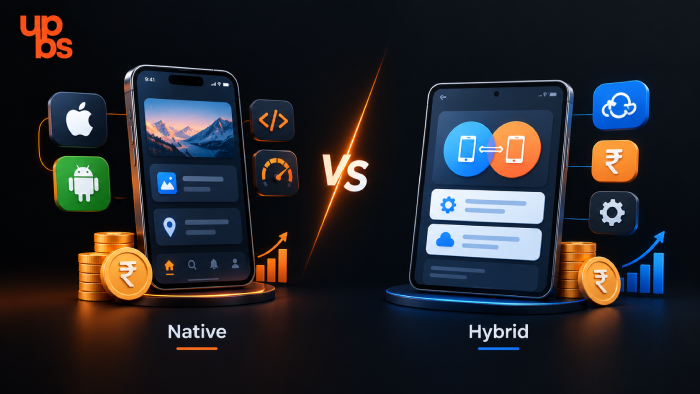
Choosing between native and hybrid development has a direct, measurable impact on your app development cost. Native apps built separately for iOS and Android typically cost noticeably more than hybrid apps, since two separate codebases need to be built and maintained. For many businesses testing an idea or working with a tighter budget, hybrid mobile app development offers a genuinely faster, more affordable route to launch without sacrificing most of the functionality users actually notice.
App Development Cost by Feature Complexity
App development cost scales in fairly predictable tiers based on complexity:
- Basic app - simple UI, limited screens, no complex backend
- Mid-complexity app - user accounts, basic API integrations, moderate design work
- Complex app - real-time features, payment gateways, custom backend, advanced UI/UX
Each step up in complexity adds meaningfully to both development time and cost, which is why scoping features honestly upfront matters more than chasing a specific number.
Mobile App Development Cost in India: By App Category
The type of app you're building shapes app development cost as much as its complexity does. Broadly, categories break down like this:
- E-commerce app - product catalogs, cart, payment gateway, order tracking
- On-demand/delivery app - real-time tracking, multiple user roles, live notifications
- Social networking app - user profiles, feeds, messaging, media handling at scale
- Healthcare app - appointment booking, secure data handling, compliance requirements
- Fintech app - high security standards, payment processing, regulatory compliance
- Enterprise/internal app - simpler UI, focused on internal workflows over consumer-facing polish
Categories with regulatory or security requirements, like fintech and healthcare, consistently push app development cost higher regardless of how simple the interface looks.
Developer Rates in India: What You Pay Per Hour
App development cost ultimately comes down to hours worked multiplied by developer rates, and rates in India vary significantly by experience level. Junior developers charge the least, mid-level developers sit in the middle, and senior or lead developers command the highest rates. Agencies often blend these rates across a team, while individual freelancers may quote a single flat hourly rate regardless of task complexity which is worth asking about upfront, since a project needing senior-level architecture work shouldn't be billed entirely at junior rates, or vice versa.
Does Location in India Affect App Development Cost?
Yes, location within India does influence app development cost, though not as dramatically as country-to-country differences. Here's how it typically breaks down:
|
City Tier |
Example Cities |
Relative Cost Level |
What Drives the Difference |
|
Tier 1 |
Bangalore, Mumbai, Delhi NCR |
Highest |
Higher cost of living, concentrated demand for top talent |
|
Tier 2 |
Noida, Pune, Ahmedabad |
Moderate |
Lower operational overhead, same access to experienced developers |
|
Tier 3 |
Smaller cities and emerging tech hubs |
Lowest |
Lowest overhead, though talent depth can vary more |
For most businesses, this makes Tier 2 hubs a genuinely practical middle ground between big-city expertise and tighter budgets, without the quality trade-offs sometimes seen at the lowest end of Tier 3 pricing.
India vs. US, UK & Eastern Europe: The Real Cost Comparison
Putting India's app development cost next to other major outsourcing markets makes the gap clear. India consistently offers the broadest talent pool at the most competitive rates, followed by Eastern Europe as a common "middle ground" outsourcing choice, with the UK and US sitting well above both at the highest end of the global pricing spectrum. This is a major reason app development cost in India remains attractive even to businesses that could afford Western agencies but choose not to.
How to Use a Mobile App Cost Calculator (Even a Rough One)
A mobile app cost calculator won't give you an exact figure, but it forces you to think through the variables that actually drive price before you ever talk to a developer. At minimum, list out your core features, your target platforms, whether you need custom design or can work from templates, and any third-party integrations you know you'll need. Feeding that list into even a basic mobile app cost calculator or simply walking through it with a development team gives you a far more realistic starting budget than guessing based on what a competitor's app might have cost.
App Development Cost vs. Website Development Cost: What's Different
It's a common question: does building an app cost more than a website? Generally, yes app development cost tends to run higher than website development cost for comparable functionality, mainly due to platform-specific builds and app store requirements that websites don't have. If you're weighing both options for a new business, it's worth reviewing website development costs for startups side by side with your app budget before committing to either one.

Website or App First? Making the Right Call
This decision affects your total spend more than almost anything else in early-stage planning. Building the wrong one first or both at once without a clear reason is one of the most expensive mistakes businesses make. If you haven't settled this yet, it's worth reading through what to build first, a website or an app, since the answer directly shapes how you should be budgeting your app development cost from day one.
Hidden Costs Businesses Often Miss
Beyond the initial build, several costs regularly catch businesses off guard:
- App store fees - one-time and annual developer account charges
- Ongoing maintenance - OS updates, bug fixes, and security patches
- Third-party service costs - payment gateways, cloud hosting, analytics tools
- Marketing and ASO - getting the app discovered after launch
- Version updates - new features and platform compatibility over time
Budgeting only for the initial build and ignoring these recurring costs is one of the most common reasons app budgets run over.
Why App Development in India Costs Less (Without Compromising Quality)
India remains one of the most cost-effective markets for app development globally, and it's not because of lower quality it's due to a large, experienced talent pool and lower operational overhead compared to markets like the US or UK. This is exactly why so many international businesses continue outsourcing app development to Indian teams rather than building in-house abroad.
How to Reduce App Development Cost Without Cutting Corners
A few practical strategies can bring your app development cost down without sacrificing the end product:
- Launch with a minimum viable product (MVP) instead of every feature at once
- Choose hybrid development over native if cross-platform reach matters more than platform-specific performance
- Reuse existing design systems instead of building custom UI from scratch
- Plan integrations upfront to avoid expensive rework later
Don't Forget Visibility After Your App Launches
Building the app is only half the equation; an app nobody finds doesn't generate returns regardless of how much it costs to build. Pairing your app launch with proper SEO strategy for your supporting website and app store listing ensures the investment in your app development cost actually translates into real users finding and downloading it.
Why Businesses Choose UPBS Technology for App Development
At UPBS Technology, app development cost is scoped transparently from the very first conversation, no vague estimates, no hidden line items added later. Our app development services are built around your actual feature list and budget, not a one-size-fits-all package. Here's what that looks like in practice:
- Detailed cost breakdowns by feature, not a single bundled number
- Native and hybrid development options scoped honestly based on your actual needs
- Transparent timelines tied to your budget, not inflated promises
- Ongoing post-launch support built into the plan from day one
Building a Website Alongside Your App
Many businesses need both a website and an app working together, the website driving discovery through search, and the app serving customers who've already converted. If that's the direction you're heading, pairing your app budget with a properly scoped website development plan from the same team keeps both projects aligned instead of built in isolation by separate vendors.
Ready to Get a Transparent App Development Cost Estimate?
Guessing at app development cost from generic online ranges only gets you so far every app is different, and so is every budget. Talk to UPBS Technology for a clear, honest cost breakdown based on your actual features and goals, not a one-size-fits-all number pulled from a calculator.
Frequently Asked Questions
What is the average app development cost in India?
App development cost in India starts as low as ₹50,000 for very basic apps and increases substantially based on complexity, features, and platform choice. Rather than a single fixed number, most projects fall somewhere on a wide spectrum depending on what the app actually needs to do.
How can I calculate my app development cost before hiring a developer?
Use a mobile app cost calculator, or manually list your core features, target platforms, design needs, and required integrations. Walking through these variables with a development team gives a far more realistic estimate than guessing based on a competitor's app.
Is hybrid app development cheaper than native development?
Yes, hybrid app development typically costs noticeably less than native development, since it uses a single codebase across iOS and Android instead of building and maintaining two separate native apps.
Why is app development cost lower in India than in the US or UK?
App development cost in India runs significantly lower than equivalent projects in Western markets due to a large, experienced talent pool and lower operational overhead, not reduced quality or expertise.
What hidden costs should I budget for beyond the initial app build?
Beyond the build itself, budget for app store fees, ongoing maintenance and updates, third-party service costs like payment gateways and hosting, and marketing or app store optimization to get the app discovered after launch.
Should I build a website or an app first if my budget is limited?
For most businesses, a website comes first since it's more discoverable and costs less to launch and maintain. An app typically makes more sense once you already have a steady audience that wants a more direct, ongoing relationship with your brand.