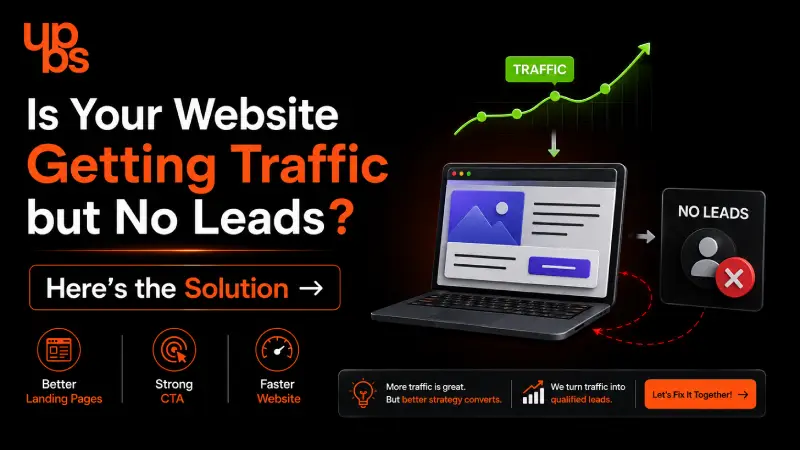
Getting thousands of website visitors every month may seem like a success, but traffic alone doesn't grow your business. If your website isn't generating inquiries, demo requests, phone calls, or sales, you're missing valuable conversion opportunities.
Many businesses invest in SEO, Google Ads, and social media to increase traffic, only to find that leads remain low. The problem often isn't the number of visitors, it's what happens after they arrive. Poor user experience, unclear messaging, weak calls-to-action, slow-loading pages, mismatched search intent, and a lack of trust signals can all prevent visitors from becoming customers. In this guide, you'll discover why your website isn't converting, the most common reasons behind low lead generation, and practical strategies to turn more of your existing traffic into qualified leads and business growth.
Why So Many Websites Get Traffic But No Leads
If your website is attracting visitors but not generating inquiries, you're not alone. This is one of the most common challenges businesses face today. Many websites rank well on Google, receive consistent traffic from SEO, paid ads, or social media, yet struggle to convert those visitors into actual leads or customers. The reason is simple: traffic and conversions are two different metrics. Driving visitors to your website is only the first step. The real goal is to persuade those visitors to take action whether that's filling out a contact form, requesting a quote, booking a consultation, or making a purchase.
Several factors can create this gap between traffic and lead generation, including:
- Your content attracts the wrong audience.
- Visitors can't immediately understand what you offer.
- Your website lacks clear and compelling calls-to-action (CTAs).
- Slow page speed or poor mobile experience causes users to leave.
- There aren't enough trust signals such as reviews, testimonials, or case studies.
- The buying journey is confusing or requires too many steps.
Even websites with thousands of monthly visitors can experience low conversion rates if these issues aren't addressed. Instead of focusing only on increasing traffic, businesses should optimize every stage of the customer journey from the moment a visitor lands on the page to the point they become a qualified lead.
The good news is that these problems are fixable. By understanding why visitors leave without converting and making targeted improvements, you can turn existing website traffic into a steady source of high-quality leads without necessarily increasing your marketing budget.
The 6 Real Reasons Your Website Isn’t Generating Leads
If your website receives consistent traffic but very few inquiries, the issue is rarely the number of visitors. More often, it's a combination of user experience, messaging, and conversion optimization problems that stop potential customers from taking the next step.
Here are the six most common reasons your website isn't generating leads.
1. You're Attracting the Wrong Audience
Not all traffic is valuable. If your SEO strategy targets broad or irrelevant keywords, you'll attract visitors who have no intention of becoming customers. For example, someone searching for general information may not be ready to request a quote or buy your service.
How to fix it: Focus on search intent. Target commercial and transactional keywords, create content for people actively looking for solutions, and align each page with your ideal customer.
2. Your Value Proposition Isn't Clear
Visitors decide within seconds whether your website is relevant. If your homepage or landing page doesn't clearly explain what you do, who you help, and why you're different, many users will leave without exploring further.
How to fix it: Use a clear headline, concise supporting copy, and highlight your unique benefits above the fold. Make it immediately obvious why someone should choose your business.
3. Weak or Missing Calls-to-Action (CTAs)
Even interested visitors won't convert if they aren't guided toward the next step. Generic buttons like "Learn More" or hidden contact forms often lead to missed opportunities.
How to fix it: Add strong, action-oriented CTAs such as "Request a Free Quote," "Book a Consultation," "Get a Free Website Audit," or "Contact Our Experts." Place them strategically throughout your pages.
4. Poor User Experience and Slow Website Performance
A slow-loading website, confusing navigation, or poor mobile experience can quickly drive visitors away. If users struggle to find information or your pages take too long to load, they'll likely choose a competitor instead.
How to fix it: Improve page speed, simplify navigation, optimize for mobile devices, and ensure every page is fast, clean, and easy to use.
5. Your Website Doesn't Build Trust
People rarely share their contact details with a business they don't trust. Missing testimonials, case studies, client logos, certifications, or clear contact information can make your business appear less credible.
How to fix it: Showcase customer reviews, success stories, industry certifications, awards, and real project results. Trust signals reduce hesitation and increase conversion rates.
6. You're Not Optimizing for Conversions
Many businesses invest heavily in SEO and advertising but never optimize their website for lead generation. Without testing and improving your forms, CTAs, layouts, and landing pages, conversion opportunities are lost.
How to fix it: Track user behavior with analytics, perform A/B testing, simplify lead forms, and continuously improve your website based on real user data.
Getting traffic is an important achievement, but it's only the beginning. When your website attracts the right audience, communicates value clearly, builds trust, and makes it easy to take action, you'll start converting more visitors into qualified leads and real business growth.
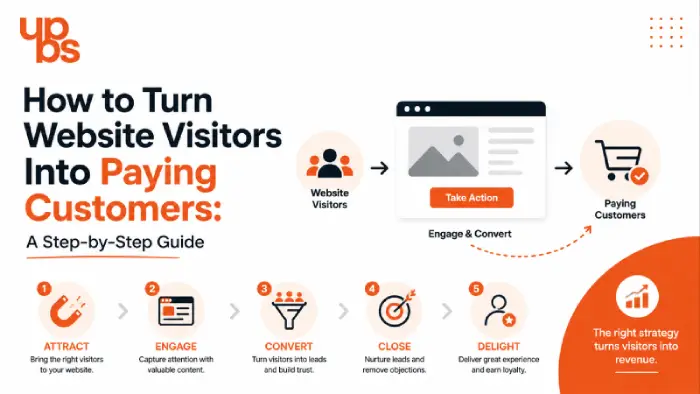
How to Turn Website Visitors Into Paying Customers: A Step-by-Step Guide
Getting visitors to your website is only half the battle. The real goal is to turn those visitors into qualified leads and paying customers. If your website isn't converting, you don't always need more traffic, you need a better conversion strategy.
Follow these proven steps to improve your website's lead generation performance.
Step 1: Understand Your Visitors' Intent
Every visitor comes to your website with a specific goal. Some are researching, while others are ready to buy. If your content doesn't match their search intent, they'll leave without taking action.
What to do:
- Target keywords with commercial and transactional intent.
- Create landing pages for each service or solution.
- Answer the questions your ideal customers are searching for.
Step 2: Improve Your First Impression
Visitors form an opinion about your website within a few seconds. A confusing layout or unclear message can increase bounce rates and reduce conversions.
What to do:
- Write a clear headline that explains what you offer.
- Add a compelling subheading that highlights the main benefit.
- Use clean, professional visuals that support your message.
- Ensure important information is visible above the fold.
Step 3: Add Strong Calls-to-Action (CTAs)
Your website should guide visitors toward the next step instead of expecting them to figure it out themselves.
Effective CTA examples:
- Get a Free Quote
- Book a Free Consultation
- Request a Website Audit
- Schedule a Demo
- Contact Our Team
Place CTAs on your homepage, service pages, blog posts, and at the end of every important section.
Step 4: Build Trust Before Asking for Contact Details
People are more likely to become leads when they feel confident in your business.
Include trust signals like:
- Customer testimonials and reviews
- Case studies with measurable results
- Client logos
- Industry certifications and awards
- Google ratings
- Secure HTTPS connection
- Clear contact information
These elements help reduce hesitation and improve conversion rates.
Step 5: Simplify Your Lead Forms
Long or complicated forms discourage visitors from contacting you.
Best practices:
- Ask only for essential information.
- Keep forms short and easy to complete.
- Make forms mobile-friendly.
- Clearly explain what happens after submission.
The easier it is to contact you, the more leads you'll receive.
Step 6: Optimize Website Speed and Mobile Experience
A slow or poorly optimized website can cause visitors to leave before they even read your content.
Focus on:
- Fast page loading times
- Mobile-responsive design
- Simple navigation
- Optimized images
- Easy-to-read layouts
A seamless user experience keeps visitors engaged and increases the likelihood of conversion.
Step 7: Measure, Test, and Improve Continuously
Lead generation isn't a one-time task. The highest-converting websites are constantly tested and refined.
Track key metrics such as:
- Conversion rate
- Bounce rate
- Average engagement time
- Form submissions
- CTA click-through rate
Use these insights to improve headlines, landing pages, CTAs, and forms over time. Even small changes can lead to significant improvements in lead generation.
Turn Traffic Into Business Growth
Your website shouldn't just attract visitors, it should convert them into customers. By understanding user intent, improving your messaging, building trust, simplifying the customer journey, and continuously optimizing for conversions, you can generate more qualified leads without increasing your marketing budget.
Remember, more traffic doesn't always mean more business. A website designed for conversions will consistently outperform one that's focused only on attracting visitors.
Landing Page Optimization: A High-Impact Strategy for Small Businesses
For many small businesses, the fastest way to generate more leads isn't increasing website traffic, it's improving the landing pages where visitors arrive. A well-optimized landing page removes distractions, communicates value clearly, and encourages visitors to take a specific action.
Unlike a homepage, which often serves multiple purposes, a landing page is designed with one goal: converting visitors into leads.
Why Landing Pages Convert Better
When someone clicks on your Google Ads campaign, SEO result, or social media post, they expect to find exactly what they searched for. If they land on a generic page that doesn't address their needs, they're likely to leave without converting.
A dedicated landing page keeps visitors focused by providing:
- A clear and benefit-driven headline
- A compelling explanation of your product or service
- Relevant images or visuals
- Customer testimonials and trust badges
- A prominent call-to-action (CTA)
- A simple lead capture form
The fewer distractions visitors face, the more likely they are to take the next step.
Key Elements of a High-Converting Landing Page
To maximize conversions, every landing page should include:
- A Strong Value Proposition: Clearly explain how your product or service solves the visitor's problem.
- A Clear Call-to-Action: Use action-focused buttons such as "Get a Free Quote," "Book a Consultation," or "Request a Demo."
- Trust Signals: Display client logos, reviews, testimonials, certifications, and case studies to build credibility.
- Mobile-Friendly Design: Ensure the page looks and performs well on smartphones and tablets.
- Fast Loading Speed: Even a few extra seconds of loading time can increase bounce rates and reduce conversions.
- Simple Forms: Ask only for essential information to make it easy for visitors to contact you.
Common Landing Page Mistakes
Many businesses lose potential leads because of avoidable mistakes, such as:
- Sending all traffic to the homepage instead of a relevant landing page.
- Using multiple CTAs that confuse visitors.
- Writing lengthy, unclear copy that hides the main benefit.
- Ignoring mobile optimization.
- Failing to include testimonials or other trust-building elements.
- Asking for too much information in lead forms.
Keep Testing for Better Results
Landing page optimization isn't a one-time task. Regularly test headlines, CTA buttons, page layouts, images, and form lengths to discover what drives the highest conversion rates. Small improvements can have a significant impact on lead generation over time.
The Bottom Line
If your website is getting traffic but not generating leads, optimizing your landing pages is one of the most effective improvements you can make. A focused, fast, and user-friendly landing page helps visitors understand your offer, builds trust, and guides them toward becoming qualified leads turning existing traffic into real business opportunities.
What Makes a Landing Page Convert More Visitors
A high-converting landing page is designed with one objective: to encourage visitors to take a specific action. Instead of overwhelming users with too much information or multiple navigation options, it delivers a clear message, builds trust, and makes the next step obvious.
Here are the essential elements of a landing page that consistently converts visitors into leads:
1. A Clear, Benefit-Driven Headline
Your headline should immediately tell visitors what you offer and how it benefits them. Within a few seconds, they should understand they're in the right place.
Example:
Get More Qualified Leads With a Website Built to Convert
2. A Compelling Value Proposition
Below the headline, explain why your solution is the best choice. Focus on the results customers can expect rather than simply listing features.
Instead of:
"We build modern websites."
Say:
"We create fast, SEO-friendly websites that help businesses generate more leads and increase sales."
3. A Strong Call-to-Action (CTA)
Every landing page should have one primary CTA that stands out visually and encourages immediate action.
Examples:
- Get a Free Quote
- Book a Free Consultation
- Request a Website Audit
- Schedule a Demo
Place your CTA above the fold and repeat it strategically throughout the page.
4. Trust Signals That Reduce Hesitation
People are more likely to convert when they trust your business. Include elements that reinforce your credibility, such as:
- Customer testimonials
- Google reviews
- Client logos
- Case studies with measurable results
- Industry certifications or awards
- Years of experience
These trust signals reassure visitors that they're making the right decision.
5. Simple and Focused Lead Form
Your form should collect only the information you actually need. The shorter the form, the more likely visitors are to complete it.
A typical lead form includes:
- Name
- Email Address
- Phone Number (optional if not essential)
- Brief Project or Requirement
Avoid asking unnecessary questions that create friction.
6. Mobile-Friendly and Fast Loading
With a large percentage of users browsing on mobile devices, your landing page must load quickly and display perfectly on every screen size. A fast, responsive page improves user experience and increases conversion rates.
7. Clear Benefits Instead of Long Feature Lists
Visitors care more about the outcomes they'll achieve than the technical details of your service.
For example, instead of saying:
- Responsive Design
- SEO Optimization
- Fast Hosting
Explain the benefits:
- Generate more leads from your website
- Improve your Google visibility
- Deliver a faster experience that keeps visitors engaged
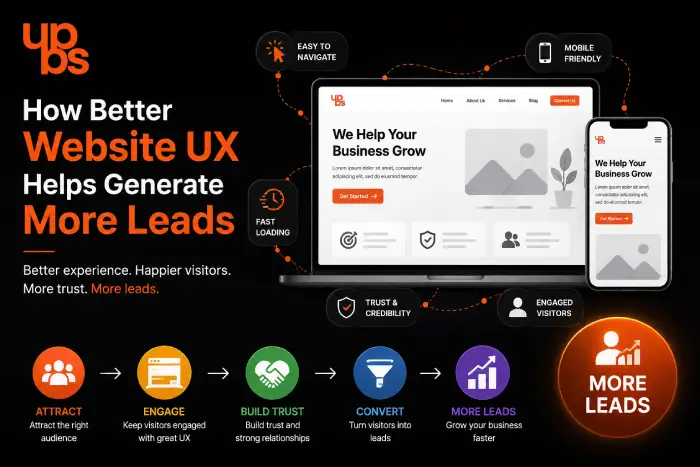
How Better Website UX Helps Generate More Leads
Many businesses focus heavily on SEO, paid advertising, and content marketing to attract visitors but overlook one of the biggest factors affecting conversions: User Experience (UX). Even if your website ranks well on Google, a poor user experience can prevent visitors from becoming leads.
Website UX is about how easy, fast, and enjoyable it is for users to navigate your site and complete a desired action. If visitors struggle to find information, encounter slow-loading pages, or feel confused by your layout, they'll likely leave before contacting you.
Why UX Directly Impacts Lead Generation
Every additional click, confusing menu, or unnecessary distraction creates friction in the customer journey. The more effort visitors have to make, the lower your conversion rate becomes.
A good user experience helps visitors:
- Find the information they need quickly.
- Understand your products or services without confusion.
- Build trust in your business.
- Complete actions like filling out a form or requesting a quote with minimal effort.
The smoother the experience, the more likely visitors are to convert into qualified leads.
Common UX Mistakes That Cost You Leads
Many websites lose potential customers because of avoidable UX issues, including:
- Confusing Navigation: Visitors can't easily find your services, pricing, or contact information.
- Slow Page Speed: Long loading times increase bounce rates and reduce user engagement.
- Poor Mobile Experience: Pages that aren't optimized for smartphones create frustration and drive users away.
- Cluttered Layouts: Too much text, excessive animations, or competing design elements distract visitors from your main message.
- Weak Visual Hierarchy: Important information and CTAs don't stand out, making it difficult for users to know what to do next.
- Complex Contact Forms: Asking for unnecessary details discourages visitors from submitting inquiries.
UX Best Practices That Improve Conversions
Improving your website's UX doesn't always require a complete redesign. Small changes can significantly increase lead generation.
Focus on these improvements:
- Keep navigation simple and intuitive.
- Make your primary CTA visible above the fold.
- Improve page speed by optimizing images and reducing unnecessary scripts.
- Design for mobile-first users.
- Use clear headings, short paragraphs, and plenty of white space for better readability.
- Ensure buttons are easy to tap and forms are quick to complete.
- Add trust signals, such as testimonials and client logos, near conversion points.
Test Your User Experience Regularly
User expectations change over time, so your website should evolve with them. Review analytics to identify pages with high bounce rates, low engagement, or abandoned forms. Tools like heatmaps and session recordings can reveal where visitors get stuck, helping you make data-driven improvements.
A Better Experience Leads to Better Results
A well-designed user experience doesn't just make your website look professional, it helps visitors move smoothly from interest to action. When users can quickly find what they need, trust your business, and contact you without friction, your website becomes a powerful lead-generation tool rather than just a source of traffic.
Why Choose UPBS Technology to Turn Website Traffic Into Leads
At UPBS Technology, we believe that website traffic should generate real business results, not just higher visitor numbers. Our team builds and optimizes websites with one goal in mind: converting visitors into qualified leads and customers.
From SEO and conversion-focused web design to landing page optimization and performance improvements, we create strategies that help businesses maximize every website visit. We analyze user behavior, improve website UX, strengthen calls-to-action, and optimize every stage of the customer journey to increase conversions. Whether you're attracting traffic through SEO, Google Ads, or social media, we ensure your website is designed to capture leads and drive measurable business growth.
Ready to turn your website traffic into more inquiries and sales? Contact UPBS Technology today for a free consultation and discover how we can help your business generate more qualified leads.
Conclusion
Getting website traffic is only the beginning. If visitors are not turning into enquiries, calls, or customers, the real issue may be your website’s conversion strategy. Improving your messaging, user experience, CTAs, landing pages, trust signals, and lead forms can help turn more existing visitors into qualified leads. Instead of focusing only on getting more traffic, focus on getting more value from the traffic you already have.
UPBS Technology can help optimize your website to attract the right audience and turn more visitors into genuine business opportunities.