Social media marketing has become a powerful driver of business growth in 2026, offering brands direct access to highly engaged, global audiences. Platforms like Instagram, LinkedIn enable businesses to build strong relationships with customers through personalized content, real-time interaction, and community engagement. One of the biggest advantages of social media marketing is cost-effectiveness companies can reach large audiences with relatively low investment compared to traditional advertising. Additionally, advanced analytics and AI-driven tools allow businesses to precisely target their ideal customers, measure performance, and optimize campaigns instantly.
What Is Social Media Marketing?
Social Media Marketing (SMM) is a digital marketing strategy that involves using social media platforms such as Facebook, Instagram, LinkedIn, Twitter (X), Pinterest, and YouTube to promote products, services, and brands. It includes both organic (free) and paid methods to connect with audiences, increase visibility, and achieve business goals.
- AI-powered content creation and scheduling
- Influencer collaborations
- Short-form video dominance (Reels, Shorts)
- Social commerce (selling directly through platforms)
- Community-driven engagement strategies
Businesses are no longer just “present” on social media, they are building ecosystems where customers interact, engage, and purchase seamlessly.
Why Is Social Media Marketing So Powerful?
Social media marketing is one of the most powerful digital marketing tools, and understanding the advantages of social media marketing helps businesses fully leverage its potential. It combines global reach, precise targeting, real-time engagement, and data-driven insights into a single platform. In 2026, it has evolved into a complete business ecosystem where brands can connect with billions of active users, promote their products, and build long-term relationships with customers. Its advanced targeting capabilities allow businesses to reach specific audiences based on demographics, interests, and behavior, ensuring higher engagement and better return on investment. At the same time, two-way communication enables direct interaction with customers, helping build trust and loyalty. AI-driven algorithms further enhance visibility by showing content to users who are most likely to engage, while integrated e-commerce features make it easy for users to discover and purchase products without leaving the platform.
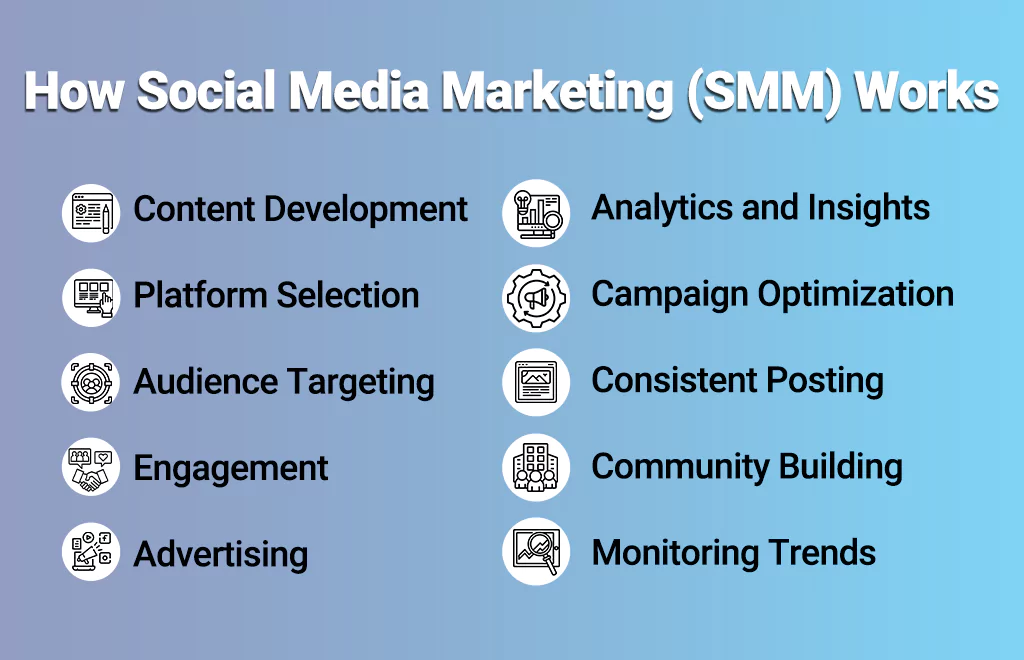
How Social Media Marketing (SMM) Works?
Social Media Marketing (SMM) works through a well-planned and continuous process that combines creativity, strategic planning, audience understanding, and performance analysis. It is not a one-time activity but an ongoing cycle of execution, measurement, and optimization to achieve consistent business growth.
1. Define Clear Business Objectives – Start by setting specific, measurable, and realistic goals that align with your overall business strategy. These goals provide direction and help measure success. Examples include:
- Improving brand awareness and engagement
- Generating 500 leads per month
- Increasing followers by 20%
2. Conduct Market and Competitor Research – Understanding your market helps you identify opportunities and avoid common mistakes. Analyze your competitors to learn what works and what doesn’t. Focus on:
- What type of content competitors are posting
- Which posts generate the most engagement
- Their posting frequency and strategy
- Gaps in the market you can fill
3. Understand Your Target Audience – Knowing your audience is key to creating relevant and engaging content. Build detailed customer personas to better understand your ideal customers. Consider:
- Demographics (age, gender, location)
- Interests and preferences
- Pain points and challenges
- Online behavior and platform usage
4. Select the Right Platforms – Not all platforms are suitable for every business. Choose platforms where your audience is most active and where your content fits naturally.
- Instagram: Visual storytelling, reels, and branding
- LinkedIn: B2B marketing and professional networking
- YouTube: Educational and long-form video content
- Facebook: Community building and targeted advertising
5. Develop a Content Strategy – A strong content strategy helps maintain consistency and relevance. Include content types such as:
- Educational and informative posts
- Entertaining reels and short videos
- Promotional offers and product highlights
- User-generated content and testimonials
6. Content Creation & Publishing – Create high-quality content that reflects your brand identity and resonates with your audience. Focus on both creativity and clarity. Key elements include:
- High-quality images and videos
- Engaging captions with clear messaging
- Consistent branding (colors, fonts, tone)
- Proper use of hashtags and keywords
10 Advantages of Social Media Marketing
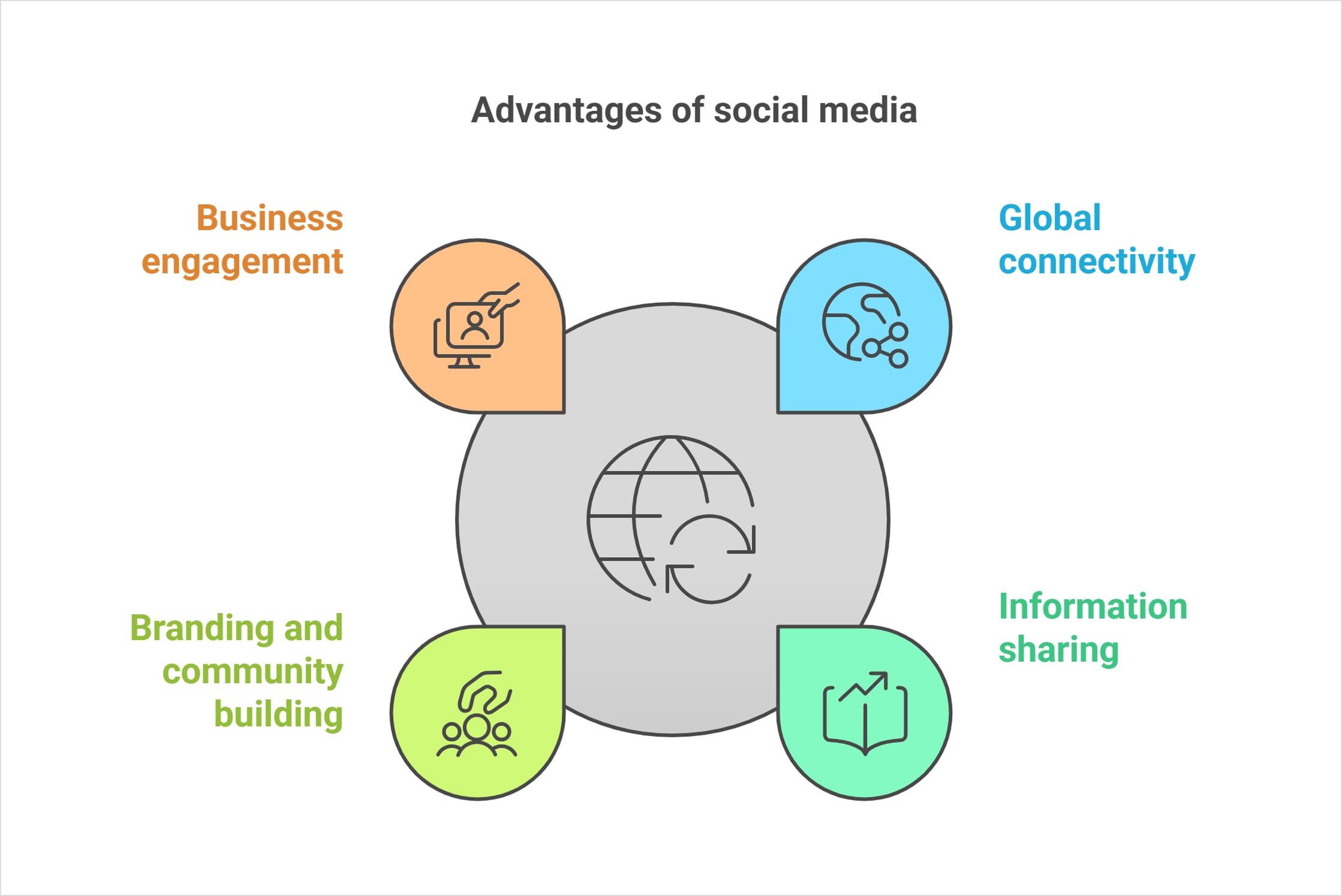
Social media marketing offers a wide range of benefits that help businesses grow faster, connect better with their audience, and stay competitive in the digital world. From increasing brand visibility to driving sales and improving customer relationships, it plays a crucial role in modern marketing strategies
1. Increased Brand Awareness
Social media helps businesses reach a wider audience quickly and effectively. With consistent posting, engaging visuals, and shareable content, brands can gain visibility and recognition. Viral posts and trending content can further amplify reach, helping businesses become more popular in their industry.
2. Cost-Effective Marketing
Compared to traditional advertising methods, social media marketing is highly affordable. Even with a limited budget, businesses can achieve strong results through organic strategies and low-cost paid ads, making it ideal for startups and small businesses.
3. Higher Customer Engagement
Interactive features like comments, stories, live videos, reels, and polls allow businesses to connect directly with their audience. This engagement builds trust, encourages conversations, and creates a loyal customer base over time.
4. Improved Website Traffic
Strategically placing links in posts, bios, and advertisements helps drive highly targeted traffic to your website or landing pages. This not only increases visibility but also improves chances of conversions and sales.
5. Better Lead Generation
Social media platforms offer built-in tools that make it easy to capture potential customers, such as:
- Lead generation forms
- Call-to-action (CTA) buttons
- Direct messaging and chat features
These tools simplify the process of collecting user information and converting interest into leads.
6. Enhanced Customer Insights
Social media analytics provide valuable data about:
- Audience behavior and preferences
- Content performance and engagement levels
- Buying patterns and trends
These insights help businesses make smarter, data-driven marketing decisions and refine their strategies.
7. Stronger Brand Authority
By consistently sharing valuable, informative, and relevant content, businesses can position themselves as experts in their field. This builds credibility and increases customer trust in the brand.
8. Faster Customer Support
Social media allows businesses to respond quickly to customer queries, complaints, and feedback. Instant communication improves customer satisfaction and shows that the brand values its customers.
9. Competitive Advantage
Businesses that actively invest in social media marketing stay ahead of competitors. A strong and consistent online presence helps brands stand out and capture more market share in a competitive environment.
10. Increased Sales and Conversions
With features like social commerce, targeted advertising, retargeting campaigns, and influencer marketing, social media directly contributes to higher sales. It shortens the customer journey from discovery to purchase, making conversions faster and more efficient.
Trends in Social Media Marketing for 2026
To stay ahead in the rapidly evolving digital landscape, businesses must adapt to the latest trends shaping social media marketing in 2026. These trends are driven by advancements in technology and changing user behavior, making marketing more personalized, interactive, and data-driven.
- AI-generated content & automation
- Short-form video dominance
- Voice and visual search integration
- Influencer & micro-influencer marketing
- Augmented Reality (AR) experiences
- Personalized content at scale
Adapting to these trends will help businesses remain competitive and maximize the impact of their social media marketing efforts.