
Programmatic SEO is a strategy that uses automation, data, and templates to create large numbers of search-optimized web pages at scale. Instead of building each page manually, websites generate pages dynamically based on patterns like location, product, or keyword variations—helping them target thousands of long-tail search queries. Many businesses also use this approach as part of their SEO service to scale content production efficiently. Top websites succeed with programmatic SEO by combining high-quality data, useful page templates, and strong technical SEO. This allows them to rank for highly specific searches while maintaining consistency and efficiency. However, success depends on balancing scale with quality. Pages must provide real value—such as unique insights, reviews, or relevant information—to avoid being seen as thin or duplicate content.
What is Programmatic SEO?
Programmatic SEO is a technique where you use data, templates, and automation to generate multiple SEO-friendly pages at scale. Instead of writing content manually for each keyword, you create a structure and let the system generate pages dynamically using different variables like location, category, or product name.
For example, instead of writing separate articles for:
- Best gyms in Delhi
- Best gyms in Gurgaon
- Best gyms in Noida
You create one template and generate all these pages using data. This approach saves time and allows websites to target thousands of long-tail keywords efficiently.
How Does Programmatic SEO Work?
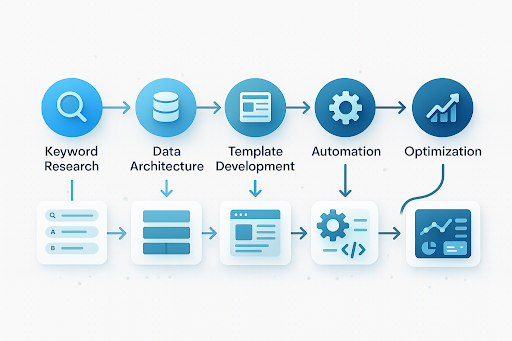
To understand how it works, think of it as a combination of SEO strategy + data + automation. First, you identify keyword patterns that can be repeated. These are usually search queries where only one variable changes, such as location or product type. Once you have these patterns, you collect structured data related to those keywords.
- Keyword Pattern Identification – The foundation of programmatic SEO starts with identifying repeatable keyword patterns instead of random keywords. These patterns allow you to scale content because only one variable changes (like city, product, or category).
- Data Collection & Structuring – Once you have your keyword patterns, the next step is to gather relevant and structured data. This data can include locations, product details, reviews, or pricing information. The quality of your data directly impacts the quality of your pages, so it’s important to keep it clean, organized, and up-to-date.
- Template Creation – In this step, you design a standard page layout that will be used across all generated pages. The template includes elements like SEO titles, headings, content sections, and FAQs. A good template is flexible enough to handle different data inputs while still maintaining a consistent structure.
4. Dynamic Page Generation – Here, automation comes into play. Using tools or scripts, you generate multiple pages by replacing variables such as city names or categories within your template. This allows you to create hundreds or thousands of pages quickly.
Programmatic SEO vs. Traditional SEO
Programmatic SEO and Traditional SEO both help in improving search rankings, but they work in very different ways. Before comparing them, let’s briefly understand each one.
Programmatic SEO
Programmatic SEO is a strategy focused on automation and scalability. In this approach, you create a template and use structured data to generate multiple pages automatically. It is mainly used when you want to target a large number of similar keywords, such as location-based or category-based searches. This method is commonly used by:
- Directory websites
- Job portals
- Travel and listing platforms
The main advantage of Programmatic SEO is that it allows you to cover thousands of keywords quickly, but it requires good data and proper optimization to maintain quality.
Traditional SEO
Traditional SEO is the approach where content is created manually for each specific keyword or topic. It focuses on writing detailed, high-quality content that provides real value and solves user queries effectively.This approach is best for:
- Blogs
- Educational content
- Personal branding websites
Traditional SEO takes more time and effort, but it helps in building authority, trust, and long-term ranking strength, which is essential for sustainable growth.
Benefits of Programmatic SEO
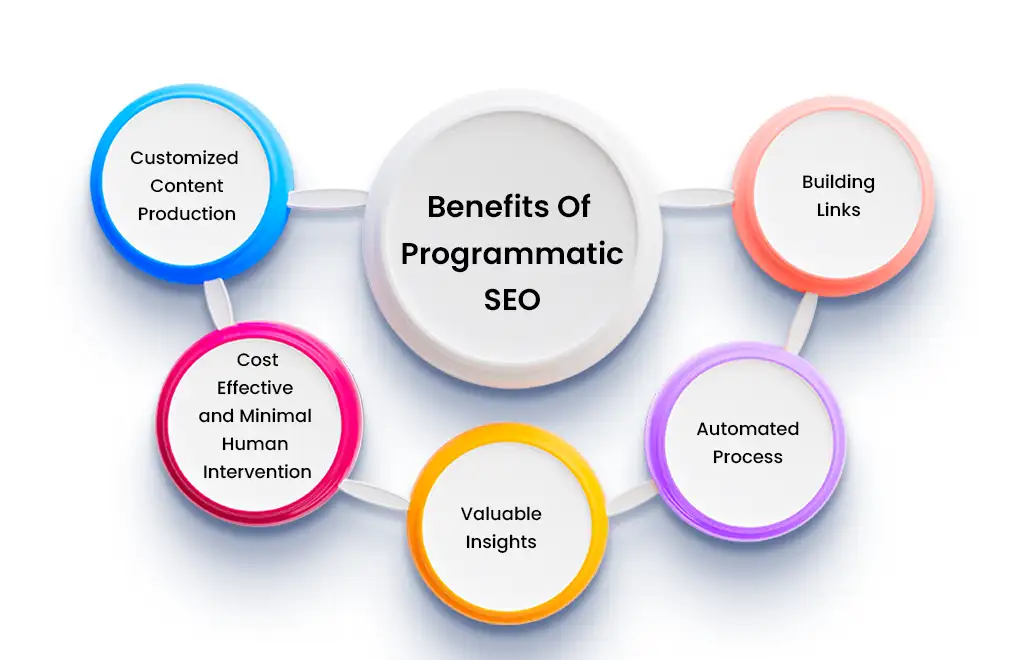
One of the biggest advantages of Programmatic SEO is its ability to generate massive traffic. By targeting long-tail keywords, you can attract users who are searching for very specific queries. It also helps in faster growth. Once your system is set up, you can create hundreds of pages in a very short time without writing each one manually. Some key benefits include:
- Scalability: Easily create thousands of pages
- Cost efficiency: Reduce content creation costs
- Better keyword coverage: Rank for multiple variations
- High conversion potential: Target specific user intent
However, these benefits only come when the content is useful and not just generated for the sake of ranking.
How to Set Up Programmatic SEO?
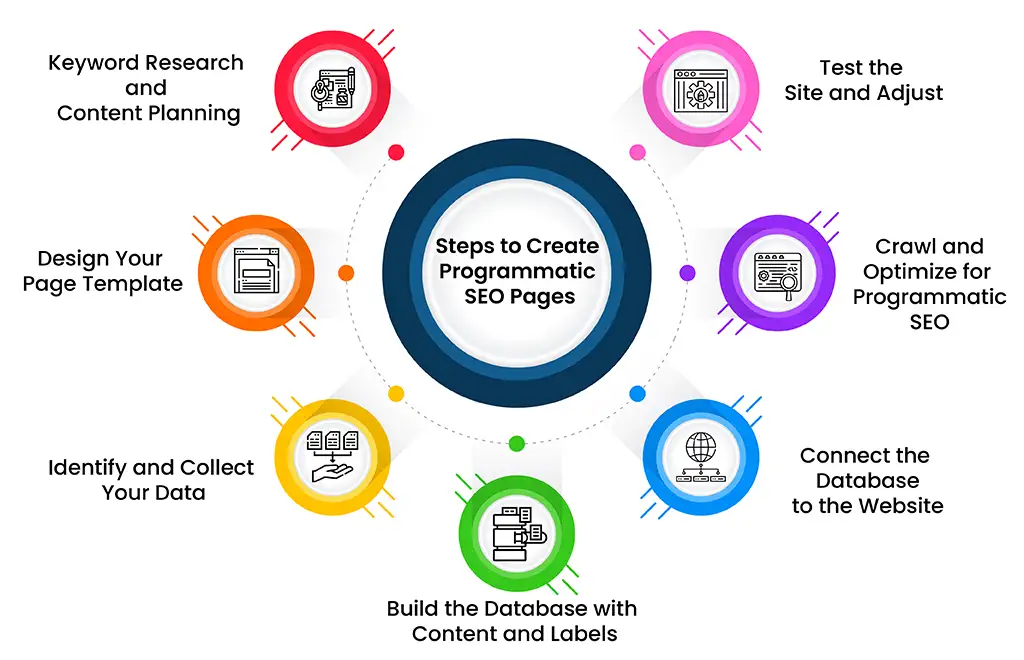
Setting up Programmatic SEO requires a step-by-step structured approach. It’s not just about generating pages automatically, but about building a system that consistently delivers value at scale. Now understand the complete process step by step:
Step 1: Identify Scalable Keyword Patterns
The first step is to find keyword patterns that can be repeated across multiple pages. These are usually phrases where one element changes, such as location, product, or category. For example:
- “Best X in Y”
- “Top X for Y”
The goal is to focus on patterns that allow you to target multiple long-tail keywords instead of just one.
Step 2: Build a Structured Dataset
Once you have your keywords, you need to collect and organize data that will be used to generate pages. This data should be clean, accurate, and properly structured. Your dataset may include:
- Locations (cities, states)
- Product or service details
- Reviews, ratings, or pricing
Good data ensures that each page feels useful and not repetitive.
Step 3: Design SEO-Friendly Templates
Next, you create a template that will be used for all your pages. This template should include all essential SEO elements. A strong template usually has:
- Dynamic title and meta description
- Headings (H1, H2, H3)
- Content sections
- FAQs and internal links
The template acts as the base structure for every generated page.
Step 4: Use Automation to Generate Pages
Now comes the automation part. Using CMS platforms, plugins, or custom scripts, you generate multiple pages by replacing variables in your template. For example:
- {City} → Delhi, Mumbai, Jaipur
- {Category} → gyms, cafes, hotels
This allows you to create hundreds or thousands of pages quickly.
Step 5: Optimize and Publish Content
Before publishing, make sure your pages are optimized properly. Even automated pages need quality checks. You should:
- Add unique content elements
- Optimize images and speed
- Ensure proper internal linking
Once everything is ready, publish your pages and submit them to search engines.
Step 6: Monitor and Improve Performance
After publishing, your work continues. You need to track how your pages are performing and make improvements over time. Focus on:
- Rankings
- Traffic (clicks and impressions)
- User engagement
Update weak pages, improve content, and refine your strategy to get better results.
Best Practices for Programmatic SEO
To succeed with Programmatic SEO, it’s important to focus not just on scale, but also on quality and user value. Simply generating thousands of pages won’t help unless those pages are useful and optimized properly.
- Avoid thin or duplicate content
- Add unique value to each page
- Use structured data (Schema)
- Focus on user intent, not just keywords
- Regularly update your dataset
Programmatic SEO works best when you balance automation with real value. Always prioritize the user experience, and your rankings will follow.
When to Avoid Programmatic SEO?
Programmatic SEO is powerful, but it’s not suitable for every situation. In some cases, using it can actually harm your website instead of helping it. Here are situations where you should avoid it:
1. You Don’t Have Enough Data
Programmatic SEO depends heavily on structured data. If your dataset is incomplete or poorly organized, your pages may look empty, repetitive, or low-quality.
2. Your Niche Requires Deep Content
In some niches, users expect detailed, accurate, and expert-level information, which cannot be delivered effectively through automated or template-based pages. In niches like:
- Health
- Finance
- Personal advice
Users expect detailed, expert-level information. In such cases, manually written, high-quality content performs much better than automated pages.
3. You Can’t Maintain Quality
If you are unable to maintain content quality at scale, it’s better to avoid programmatic SEO. Search engines prioritize value, and low-quality pages may not rank or could even be penalized.
4. Small Websites or Blogs
If you’re running a small website or personal blog, focusing on quality over quantity is a better strategy. Programmatic SEO works best for large-scale platforms with strong data and resources.
How UPBS Technology Helps with Programmatic SEO?
Scaling your website with programmatic SEO requires more than just automation—it needs the right strategy, clean data, and strong technical execution. At UPBS Technology, we help businesses build a complete system that identifies scalable keyword opportunities, creates optimized templates, and generates high-quality pages that actually rank. Our focus is not just on increasing the number of pages, but on ensuring each page delivers real value to users and performs well in search engines.
With a proven approach and result-driven strategies, UPBS Technology supports businesses in achieving long-term growth through smart SEO practices. From planning to execution and continuous optimization, we ensure your website stays ahead of the competition. That’s why we are recognized as the best SEO company in Noida, helping brands scale efficiently and dominate search results.